Published Mar 8, 2026 · Updated Sep 2, 2026
Every piece of real gold jewelry carries a small stamp somewhere, inside a ring band, on a clasp, or on the back of a pendant, that states its purity. Once you know how to read that stamp, it tells you almost everything you need to estimate value. Here is how karat and fineness stamps line up.
Karat, Fineness, and Purity at a Glance
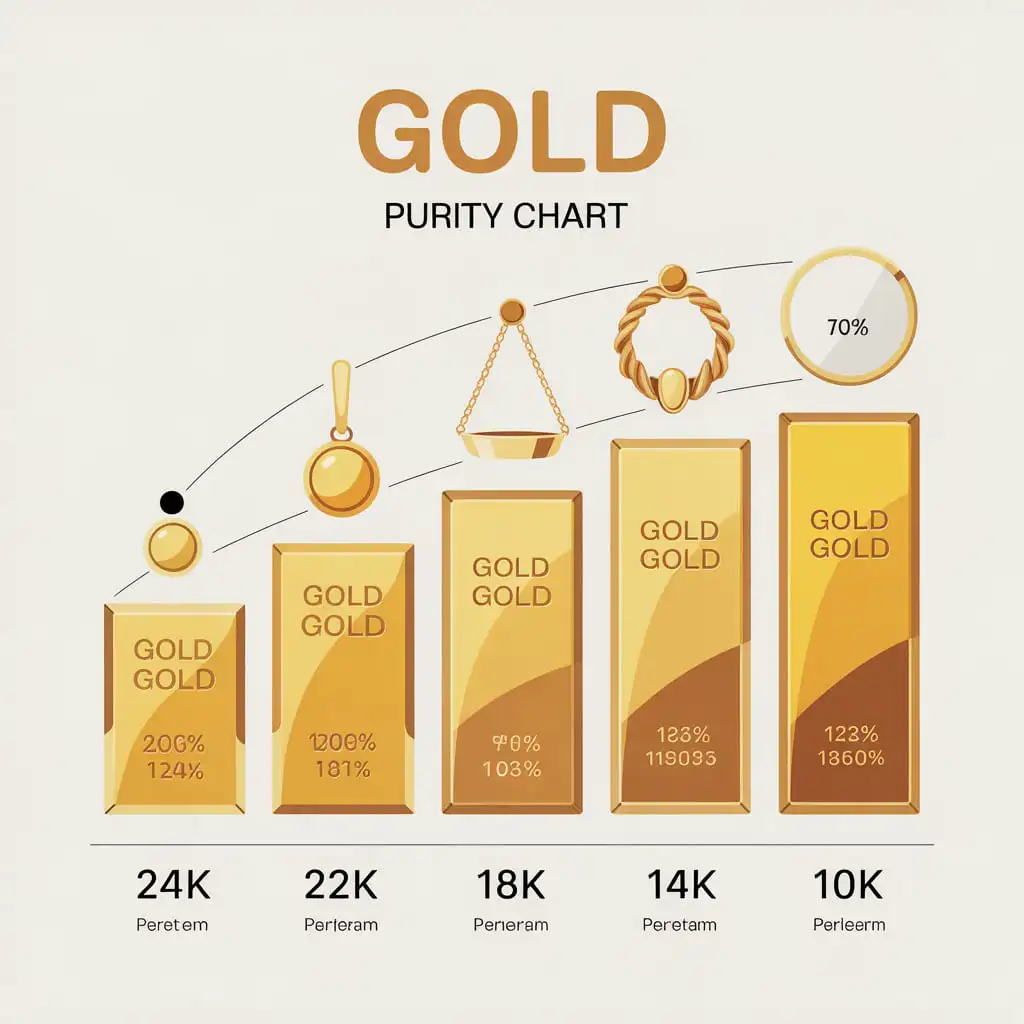
| Karat | Fineness Stamp | % Pure Gold | Common Use |
|---|---|---|---|
| 24K | 999 or 995 | 99.9% | Bullion bars, coins, some Asian jewelry |
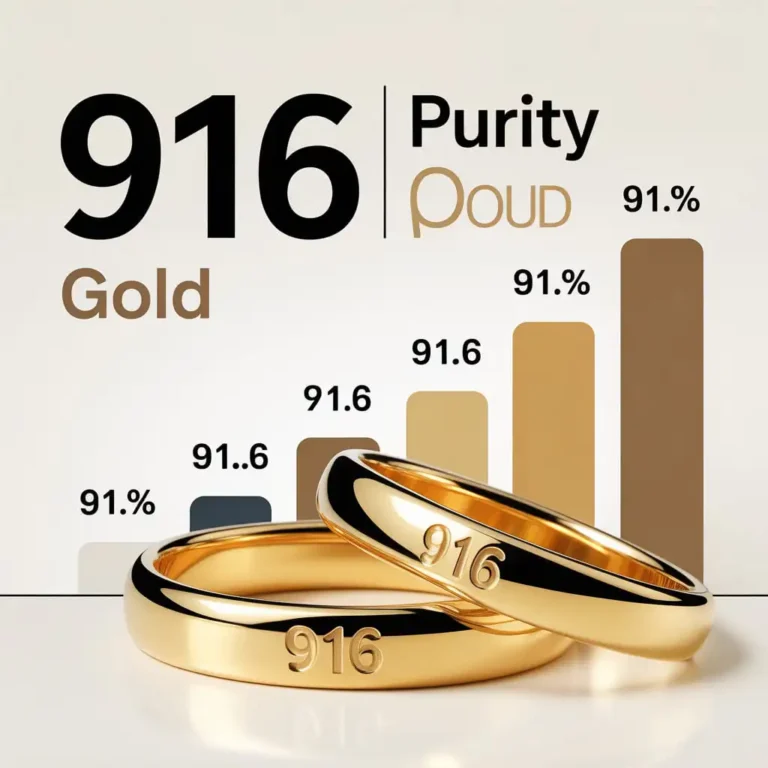
| 22K | 916 | 91.6% | Middle Eastern & South Asian jewelry |
| 18K | 750 | 75.0% | Fine jewelry, watches |
| 14K | 585 or 583 | 58.5% | Most US everyday jewelry |
| 10K | 417 | 41.7% | Budget US jewelry, class rings |
| 9K | 375 | 37.5% | Budget UK jewelry |
Karat and Fineness Are the Same Idea
Karat counts parts out of 24; fineness counts parts out of 1,000. They describe identical purity in two different notations, which is why 18K and 750 always mean the same thing regardless of which one is stamped on a given piece. European and Asian manufacturers tend to favor fineness numbers, while US and UK jewelry usually leans on the karat mark.
Why the Chart Matters for Value
Purity is one of the two inputs, along with weight, that determine what a piece of gold is actually worth. A 22K item is worth noticeably more per gram than a 14K item of the same weight, simply because more of that gram is gold rather than alloy.
Turn a Stamp Into a Value
Once you know the karat or fineness stamp on your piece, our gold purity calculator converts it into a live per-gram and total value using the current spot price.