Published Mar 8, 2026 · Updated Sep 5, 2026
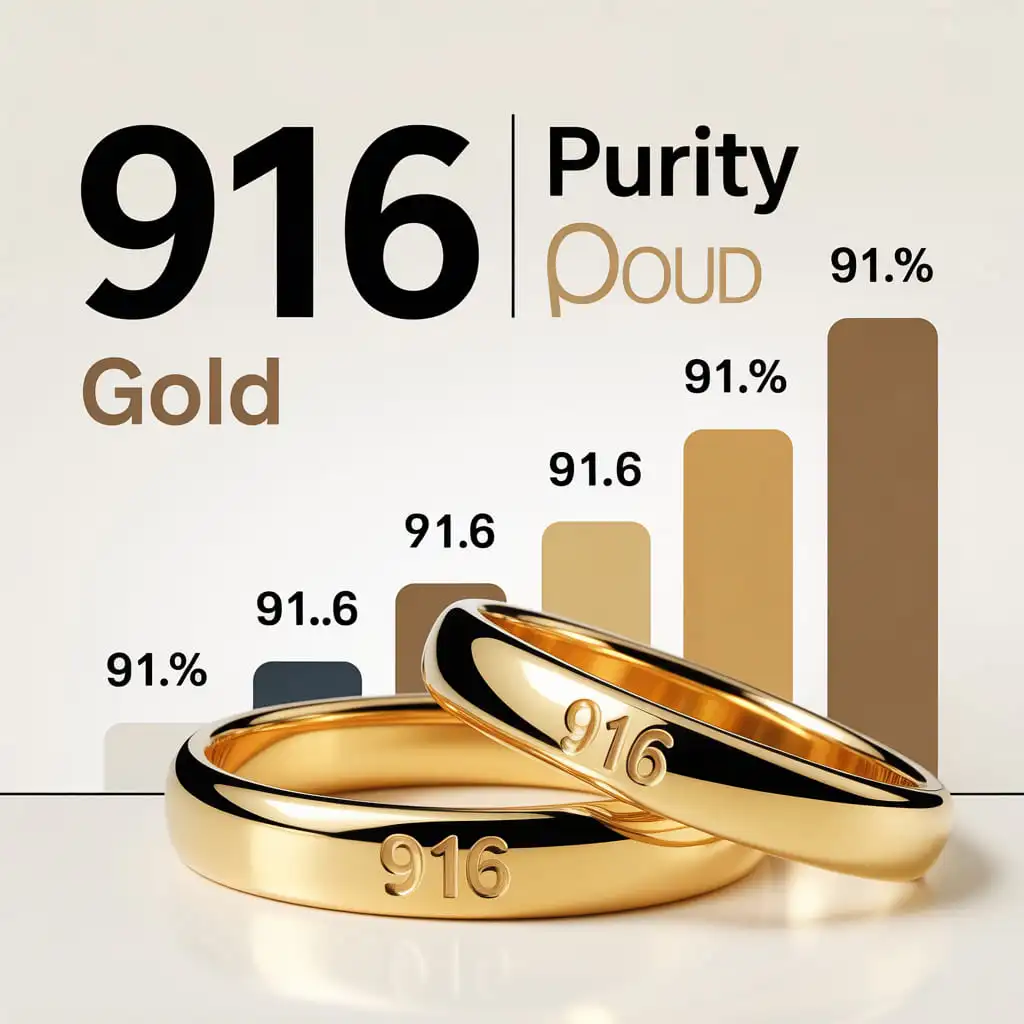
What does 916 mean on gold? A 916 stamp is one of the most common purity marks you will find on gold jewelry outside the US, and it points to a specific, well-known purity.
916 Means 22 Karat
916 parts per 1,000 is 91.6 percent pure gold, which is exactly 22 karat. A piece stamped 916 and a piece stamped 22K contain the same amount of gold; they are just labeled using two different purity systems. That single fact answers what does 916 mean on gold for almost every piece you will come across.
Why 916 Is So Common in Certain Markets
22K gold is the standard for jewelry across much of the Middle East, India, and Southeast Asia, where official hallmarking systems certify purity and gold jewelry is often bought as much for its investment and gifting value as for everyday wear. Higher purity means the piece holds closer to full gold value if it is ever resold or passed down, which matters in cultures where gold jewelry doubles as a savings vehicle, especially for weddings and dowries. The 916 stamp is how that purity is certified and recognized across those markets.
916 Compared to Other Marks
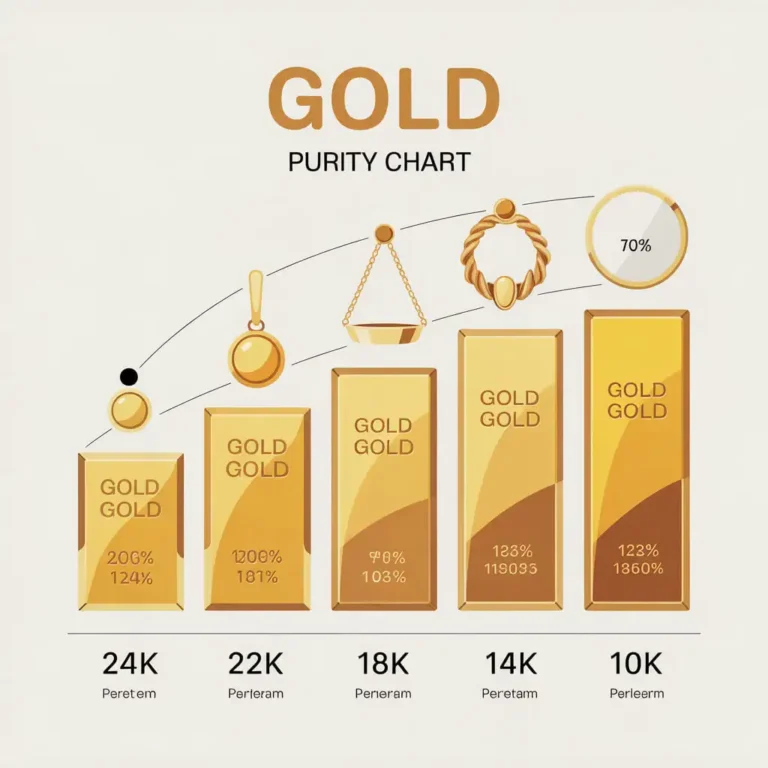
- 999 or 995 = 24K (99.9% pure)
- 916 = 22K (91.6% pure)
- 750 = 18K (75.0% pure)
- 585 = 14K (58.5% pure)
What 916 Means for Value
Because 916 gold is 91.6 percent pure, it is worth close to 24K value per gram, and noticeably more than 18K or 14K pieces of the same weight. Our gold purity calculator can convert a 916 stamp and your item’s weight into a live value using the current spot price. Understanding what does 916 mean on gold ahead of time helps you sanity-check any quote you receive from a buyer.
Example: Valuing a 916 Gold Piece
Here’s what does 916 mean on gold in practice when you’re pricing an actual item.
Scenario: a bangle stamped 916 weighs 25 grams, and the gold spot price is $2,100 per troy ounce (about $67.50 per gram).
Step 1: Convert the 916 stamp to a purity percentage. 916 per 1,000 = 91.6% pure. Step 2: Multiply the weight by the purity. 25 grams x 0.916 = 22.9 grams of pure gold. Step 3: Multiply by the spot price per gram. 22.9 x $67.50 = $1,545.75. That is the bangle’s gold value before any dealer premium or discount for workmanship.
Compare that to an 18K (750) bangle of the same 25 gram weight: 25 x 0.750 = 18.75 grams of pure gold, worth $1,265.63 at the same spot price — a meaningful difference driven entirely by the purity stamp.
Frequently Asked Questions
What does 916 mean on gold?
A 916 stamp means the gold is 91.6% pure, or 916 parts per 1,000. This is exactly equivalent to 22 karat gold, and the two labels (916 and 22K) refer to the same purity level under different marking systems.
Is 916 gold the same as 22K gold?
Yes. 916 and 22K both describe 91.6% pure gold. A piece stamped 916 contains exactly the same amount of gold as one stamped 22K; they are just labeled using two different purity systems common in different markets.
Why is 916 gold common in the Middle East and India?
22K (916) gold is the standard purity for jewelry across much of the Middle East, India, and Southeast Asia, where gold is often bought as an investment and gifting vehicle as much as for everyday wear, and higher purity holds more of its resale value.
Is 916 gold worth more than 750 or 585 gold?
Yes. Higher purity numbers mean more actual gold content per gram. 916 (22K) gold is worth noticeably more per gram than 750 (18K) or 585 (14K) gold of the same weight, since it contains a higher percentage of pure gold.
How do I calculate the value of 916 gold?
Multiply the item’s weight by 0.916 to get the pure gold content, then multiply that by the current spot price per gram. Our gold purity calculator automates this using the live spot price.