
Published Mar 8, 2026 · Updated Oct 7, 2026
Gold Bar Sizes and Weights: The Complete 2026 Guide
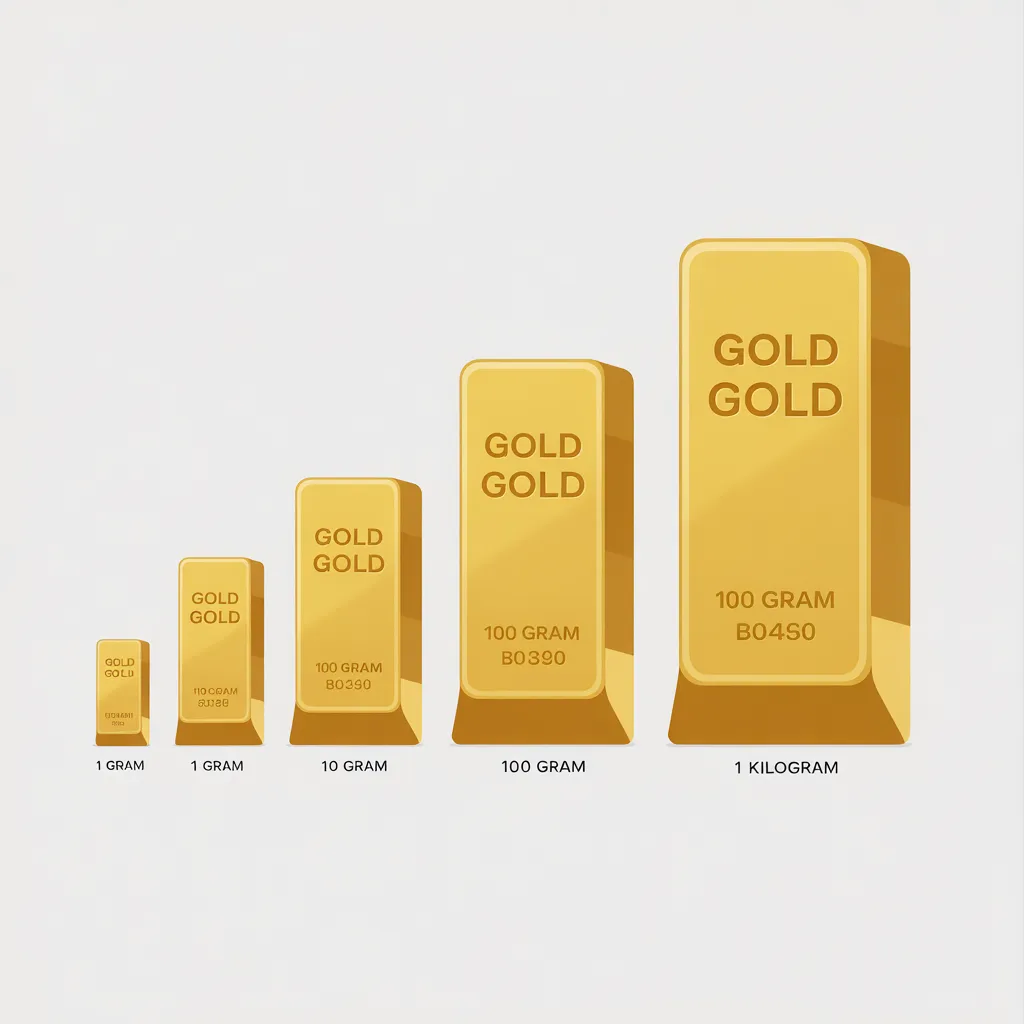
Gold bars come in far more sizes than most people realize — from 1-gram starter bars worth about $132 to 400-ounce Good Delivery bars worth over $1.6 million. This guide covers every standard size, what each weighs in grams and troy ounces, what it’s worth at today’s prices, and how to choose the right size for your goals.
Complete Gold Bar Size Chart (October 7, 2026)
| Bar size | Weight (grams) | Weight (troy oz) | Melt value |
|---|---|---|---|
| 1 g | 1 | 0.0322 | $131.76 |
| 2 g | 2 | 0.0643 | $263.52 |
| 5 g | 5 | 0.1608 | $658.80 |
| 10 g | 10 | 0.3215 | $1,317.60 |
| 20 g | 20 | 0.6430 | $2,635.20 |
| 50 g | 50 | 1.6075 | $6,588.00 |
| 100 g | 100 | 3.2151 | $13,176.00 |
| 250 g | 250 | 8.0377 | $32,940.00 |
| 500 g | 500 | 16.0754 | $65,880.00 |
| 1 kg | 1,000 | 32.1507 | $131,760.00 |
| 1 oz | 31.1035 | 1.0000 | $4,098.19 |
| 10 oz | 311.035 | 10.0000 | $40,981.90 |
| 100 oz | 3,110.35 | 100.0000 | $409,819.00 |
| 400 oz (Good Delivery) | 12,441.4 | 400.0000 | $1,639,276.00 |
Illustrative melt values computed from the October 7, 2026 spot price of $4,098.19/troy oz. Market prices include dealer premiums (see below).
Minted Bars vs. Cast Bars
- Minted bars (1 g – 100 g typically): cut from flat gold sheets, sealed in assay cards with weight and purity certified. Attractive, easy to verify, easy to resell — but carry higher premiums.
- Cast bars (100 g and up typically): poured into molds, rougher finish, stamped with weight and refiner marks. Lower premiums per ounce; the standard for serious investors.
Neither is “better” — minted bars suit small buyers and gifts; cast bars suit investors minimizing premium per ounce.
Premiums: Why Smaller Bars Cost More Per Ounce
You’ll never pay exactly melt value for a bar. Fabrication, certification, and dealer margin add a premium, and it scales inversely with size:
| Bar size | Typical premium over melt |
|---|---|
| 1 g – 5 g | 8–15% |
| 10 g – 50 g | 4–8% |
| 100 g – 1 oz | 3–5% |
| 1 kg | 1.5–2.5% |
| 400 oz Good Delivery | ~0.25–0.5% (wholesale) |
Illustrative example: a 1 oz bar at $4,098 melt might retail around $4,250 (3.7% premium), while a 1 g bar at $131.76 melt often retails near $145 (10% premium). Buying ten 1 g bars instead of one 10 g bar can cost you hundreds in extra premium.
The 400 oz Good Delivery Bar
The 400-troy-ounce bar is the backbone of the global gold market — the standard unit traded between central banks and traded on the London market under LBMA “Good Delivery” rules. Specifications: 350–430 troy ounces permitted, minimum 99.5% purity (most are 99.99%), with the refiner’s stamp, serial number, and assay marks. At today’s prices, a single 400 oz bar is worth about $1.64 million. You won’t find these at your local coin shop — they’re wholesale instruments.
The Kilobars: 1 kg Bars
The 1-kilogram bar (32.1507 troy ounces, ~$131,760 melt) is the most popular large bar in Asian and Middle Eastern markets and increasingly common with Western investors. Most kilobars are 99.99% pure, cast or minted by LBMA-accredited refiners (Valcambi, PAMP Suisse, Metalor, and others). When buying, insist on LBMA-accredited refiners — their bars resell anywhere in the world without assay questions.
Choosing the Right Bar Size
- Starting out / gifts: 1 g – 10 g. Affordable, liquid, but accept the higher premium.
- Building a position: 1 oz bars or 100 g bars. The sweet spot of reasonable premiums and easy resale.
- Serious investors: 1 kg bars. Lowest retail premiums, still resellable to any major dealer.
- Institutions: 400 oz Good Delivery. Wholesale only.
Divisibility matters. One $131,760 kilobar can’t be split if you need $10,000 quickly. Many investors hold a mix — mostly larger bars for value, plus smaller bars or coins for flexibility.
Authenticity: Avoiding Fake Bars
- Buy from established dealers or LBMA-accredited refiners; keep assay certificates and receipts.
- Tungsten-filled fakes exist: tungsten’s density nearly matches gold’s. For bars over 100 g, consider ultrasonic or XRF testing — many coin shops offer it.
- Sealed assay packaging (CertiCARD/CertiSEAL) adds resale confidence; don’t open it unless you must.
Storing Gold Bars
- Home safe: fine for small holdings; bolt it down, tell no one, check your homeowner’s insurance (most policies cap valuables — you may need a rider).
- Bank safe deposit box: cheap and secure, but contents aren’t FDIC-insured and access is limited to banking hours.
- Private vault / depository: allocated storage (your specific bars, segregated) is the professional standard for large holdings; expect ~0.5–1% of value per year.
Worked Example: What Premiums Really Cost
Illustrative example using October 7, 2026 melt values.
Two ways to buy ~$13,176 of gold:
- One 100 g bar at a 4% premium: $13,176 × 1.04 = $13,703.04
- Ten 10 g bars at a 7% premium each: ($1,317.60 × 1.07) × 10 = $14,098.32
Same gold weight, $395.28 difference — purely from the premium structure. Consolidating into fewer, larger bars is the cheapest way to buy weight; splitting into smaller bars is the price of flexibility.
US Tax Notes for Gold Bar Buyers
- No federal VAT or sales tax on bullion at the federal level — but some US states levy sales tax on precious-metal purchases below a threshold (thresholds vary by state; many exempt investment-grade bullion entirely). Check your state’s rules before a large purchase.
- Capital gains: physical gold bars are collectibles — gains on bars held over a year face up to 28% federal tax, versus lower rates for stocks. Hold records of every purchase.
- Reporting: dealers file IRS Form 1099-B on certain large sales (e.g., 1 kg bars and 400 oz bars in qualifying transactions); 1 oz bars and most retail sizes are generally exempt from dealer reporting — but your gains are still taxable.
How to Sell Gold Bars Later
Selling is the mirror of buying, and size matters in reverse:
- Get quotes from 2–3 dealers — large online bullion dealers publish live buyback prices; local coin shops compete for larger bars.
- Keep assay packaging sealed — an intact CertiCARD can be worth a 1–2% better buyback price.
- Expect spot minus a small spread — typically 1–3% under melt for common sizes from major dealers; kilobars trade closest to spot.
- For 400 oz bars, you’re in wholesale territory — work through an LBMA-member dealer or broker.
Frequently Asked Questions
What is the most common gold bar size?
The 1 oz bar and 100 g bar are the most popular retail sizes worldwide; the 1 kg bar dominates larger private investment.
How much does a 1 kg gold bar weigh?
Exactly 1,000 grams, or 32.1507 troy ounces. At October 7, 2026 prices it’s worth about $131,760 in melt value.
Are gold bars 24K?
Investment bars are typically 99.99% pure (24K). Good Delivery wholesale bars must be at least 99.5%.
Do gold bars have serial numbers?
Cast bars and larger minted bars do. Small minted bars in assay cards carry the serial on the card.
Is it better to buy gold bars or coins?
Bars carry lower premiums per ounce; government coins (like the American Gold Eagle) carry higher premiums but enjoy maximum liquidity and, in the US, universal dealer recognition.
How much is a 400 oz gold bar worth?
About $1,639,276 at the October 7, 2026 spot price — the standard wholesale unit of the global gold market.


